
Sub-Total: $0.00
Complementary Colors 101 — Mixing & Matching Like a Pro
If you’ve ever stood in front of your closet thinking, “Does this even go together?” — complementary colors might be your new secret weapon. These bold, high-impact pairings instantly elevate an outfit from simple to standout. And the best part? Once you understand the basics, it becomes one of the easiest styling tricks to master.
What Are Complementary Colors (And Why Do They Just Work)?
Complementary colors are hues that sit directly across from each other on the color wheel — blue and orange, red and green, purple and yellow. This opposite placement means each color enhances the other, making them appear richer, brighter, and more dynamic when paired together.
Think of your favorite sunset: fiery orange sky melting into deep blue water. Or imagine the crispness of holiday red popping against evergreen trees. These pairings show up in nature constantly, which is why our eyes read them as balanced, harmonious, and visually satisfying.
When you wear complementary colors, you’re tapping into that same natural contrast — but with intention.
The Science Behind the Style
Each pair combines a warm tone with a cool tone, creating instant equilibrium.
Warm tones = inviting, energetic, bold.
Cool tones = calming, crisp, grounding.
Put them together, and they naturally balance each other out. The result?
A look that feels bold but not busy, colorful but not clownish, stylish but not overwhelming.
That’s the magic of color theory — and your wardrobe can absolutely work the same way.
How to Mix Complementary Colors with Confidence
Whether you’re easing into color or already living your best vibrant life, here are simple ways to rock the pairings like a pro:
1. Start Small — Especially if Color Scares You
Not ready for head-to-toe drama? Start with accents:
- A bright orange clutch with a navy jumpsuit
- Teal earrings with a coral top
- A lavender heel with a pale yellow dress
These small pops introduce contrast without overpowering your outfit.
2. Choose a “Lead” Color and an Accent
Let one color be the star, and let the other support.
- Rock a statement emerald blazer
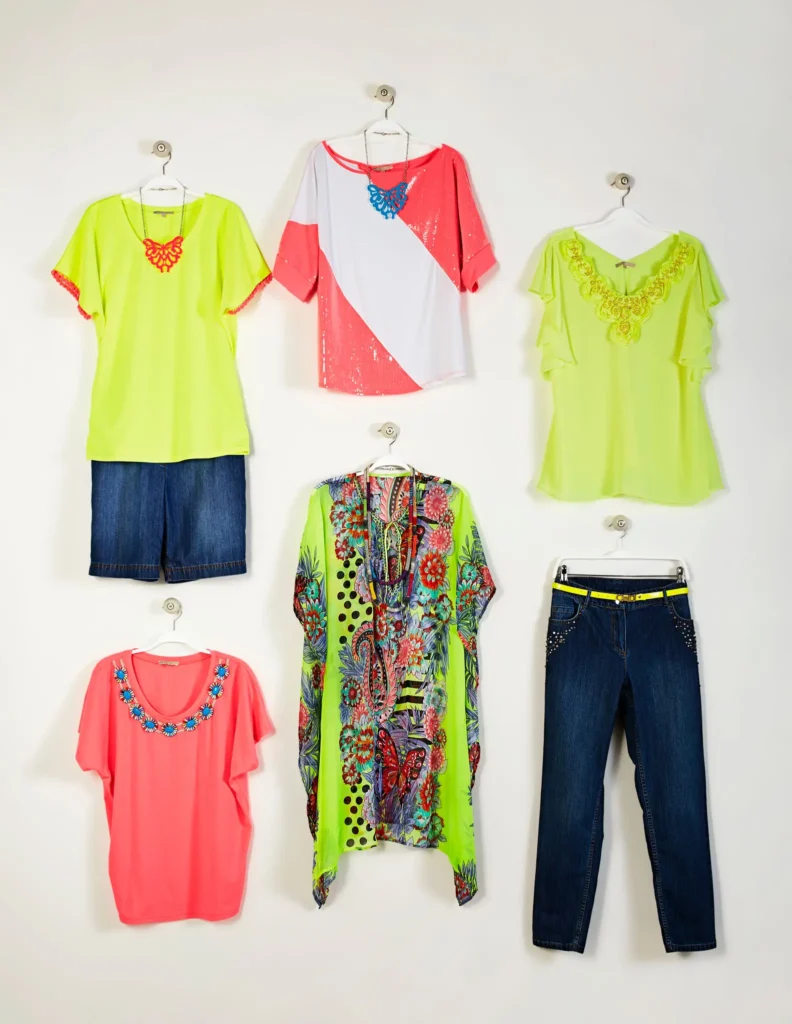
- Pair it with a neutral tan, cream, or denim bottom
- Add small pink or red accessories for a controlled complementary vibe
This approach keeps your outfit intentional, not accidental.
3. Use Prints as Cheat Codes
Designers love complementary pairings — that’s why so many prints use them naturally.
- Floral tops
- Plaid skirts
- Graphic tees
- Patterned scarves
If you’re unsure how to pair colors, pull one shade directly from the print and find its complement. It’s basically styling with training wheels, but it looks fashion-forward.
4. Let Neutrals Anchor Your Look
If a blue/orange combo feels too powerful, add beige, white, brown, or denim to soften the contrast. It keeps the harmony without the intensity.
Closet Bar Tip:
Your confidence is your best accessory — always.
Complementary color pairings aren’t just about knowing the color wheel; they’re about owning your look. Whether you go subtle or bold, rock it with intention, and watch how quickly your outfits transform into moments.